The lunch-break rulebook
How to play hand cricket
Two players. Six numbers. One little guessing game. Here are the rules we use on Hand Cricket.
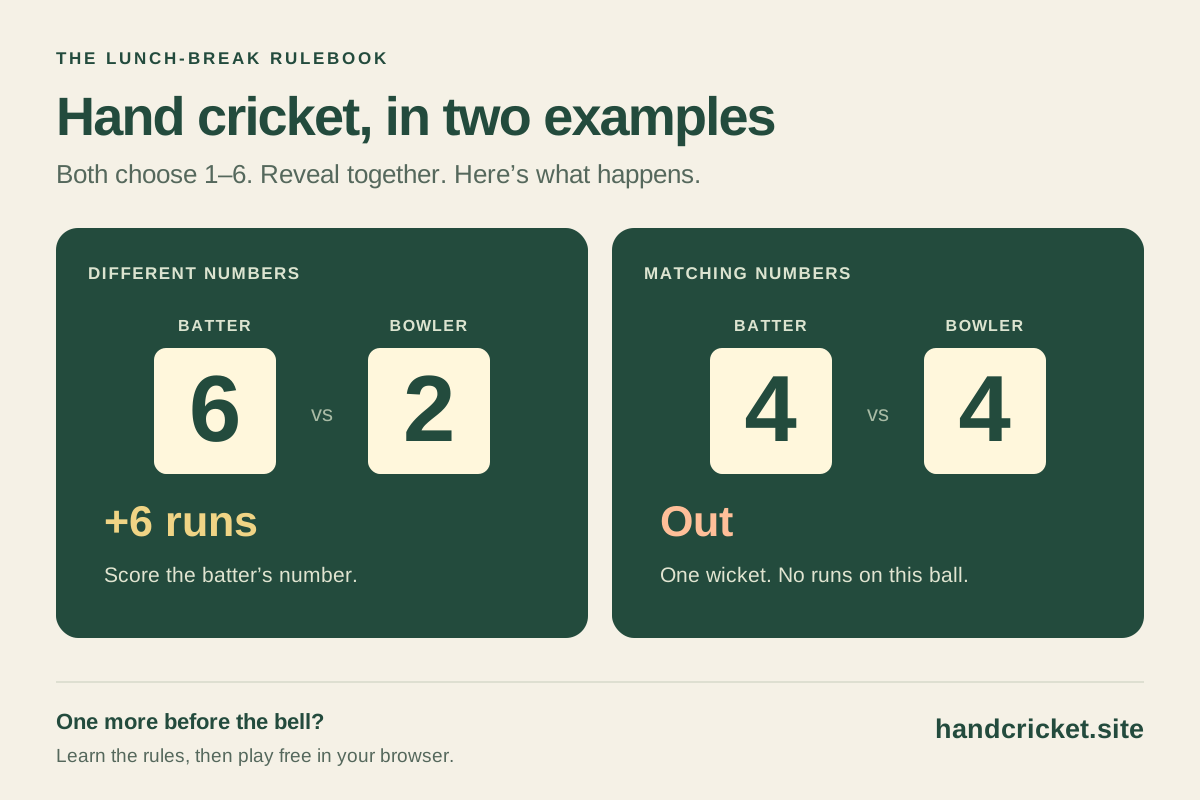
Different numbers score. Same number is out.
On every ball, the batter and bowler each choose a number from 1 to 6. The choices are hidden until both players have picked. If they differ, the batter adds their own number to the score. If they match, the batter loses a wicket and scores no runs on that ball.
Odd or even?
One player calls odd or even. Both choose a number, then add the two numbers together. If the total matches the call, the caller wins the toss; otherwise the other player wins. The toss winner chooses whether to bat or bowl first.
Take turns building a score
When batting, your number is how many runs you can score. When bowling, you are trying to match the batter’s number. Your bowling number does not earn you runs.
In the standard 2-over match, each player gets 12 balls and 1 wicket. An innings ends when the batter is out or the balls run out. Then you swap roles. Always check the format shown before the match.
One more than their score
If the first batter makes 17, the second needs 18 to win. Reaching the target ends the chase. If the chase ends below the first batter’s score, the first batter wins. If both finish on the same score, the match is tied.
In a championship, the result screen shows whether you have another match against that rival or have reached the next challenge.
Did your school play it differently?
Hand cricket has local variations. Some groups use 1–10 or different ball and wicket limits. This browser game uses 1–6; follow the match format on screen. If you are playing with your hands away from the screen, agree on the rules before the toss.
Back to the lunch break
Ready for the toss?
Pick 1–6. Play solo or challenge a friend.
Play Now.Free to play · No download needed